


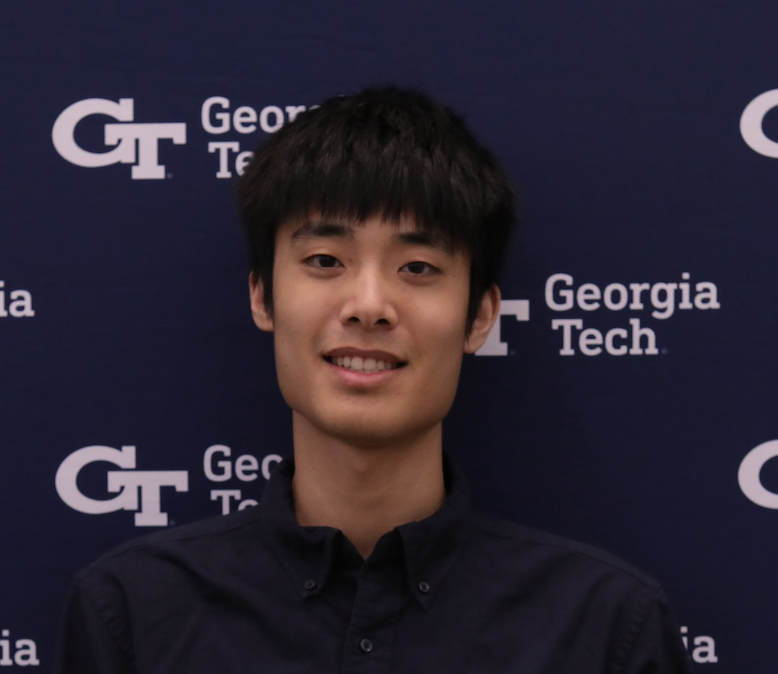
One of the 3 Undergraduate Teaching Assistants of the Year!
Great teaching skills are crucial to student academic success, and they are highly valued at the John H. Martinson Honors Program (JMHP). Second year JMHP Neuroscience student Jason Wang was honored as a 2026 Undergraduate Teaching Assistant of the Year by the Center for Teaching and Learning. Jason is a TA for a course called Neural Systems, Networks, and Behavior (NEUR 3002) taught by Dr. Ian Krout. Neural Systems, Networks, and Behavior is a required course for all undergraduate neuroscience students, and it “explores how animal behaviors emerge from neuronal networks and systems, with a specific focus on principles of network operation and computational applications” (SOURCE). Jason spends 10-15 hours a week supporting student success via office hours, grading assignments, and academic guidance. Notably, he has contributed to the redesigning of NEUR 3002 to align with the CURE framework. CURE, also known as Course-Based Undergraduate Research Experience, is a “pedagogical framework” that allows students to actively contribute to research initiatives “aligned with the course content and objectives”.
Systems Neuroscience
In NEUR 3002, this framework is established with three major components through a semester-long project. Students select a neural mechanism to focus on within the realm of systems neuroscience, then investigate the mechanism in humans and model organisms, applying it to pathology.
Jason mentions how, “students…not only turn in a physical product, but they present their findings…in a written format, or visually, and sometimes it can be multimodal.” Presentation formats might include a traditional presentation, comparative infographic, NIH-style pitch, etc., all with the goal “to see if [the CURE framework] enhances or improves sensibility to communicate scientific concepts” as a result of the pedagogical process and deliverables involved.
Jason’s Teaching Assistant Mindset
Jason has worked closely with Dr. Krout to adapt the project curriculum between semesters and emphasizes the need to take student feedback into account when making these revisions. Some significant shifts they have been working on include improving the timeline of the course so students would not jump ahead in the CURE project, reducing group size, and continuing to follow up on any concerns that students have as theys work on their CURE deliverables. He reflects that adaptation is an ongoing process, rather than a one-time initiative.
In order to cultivate a sense of community with students in the course, Jason emphasizes the need for strong instructional team function from the start. Jason mentioned, “I think coordination is very important, so that the students actually feel our presence” and understand that “we’re taking care of their concerns, we’re integrating their feedback…” etc. Even with virtual communications, the goal is to ensure students feel comfortable enough to ask for help across the semester.
The TA team continues anticipating the students’ needs to provide resources, such as review problems, feedback, and more. It is inspirational to see the commitment that Jason and the rest of the TA team have in order to make the academic experience as straightforward and meaningful as possible.
A Piece of Advice for Students
When asked for his biggest piece of advice for students, Jason explained that, “having that strong work ethic makes you stand out…because you’re the one who initiates conversations…and you always want to try and make sure that…you’re not only working for yourself, but also for other individuals.” It is crucial that students and professionals understand the bigger picture of their work and take consistent initiative to ensure productive, efficient outcomes.
About Jason + JMHP Connections
Jason also balances additional responsibilities beyond his TA position, such as Project Yellow. Jason describes Project Yellow as a mental health education club for local elementary schools, and he is particularly responsible for lesson plan development and “[adjusting] them to the needs of students…in different settings, different time constraints, etc.” He currently volunteers (2024 - present) with Emory Winship Cancer Institute. He helps to plan special events and keeps patients company as they await treatment.
Jason’s anticipated graduation is Fall 2026 and is actively submitting medical school applications for the 2026 - 2027 cycle. In between graduation and medical school, he is excited to explore other more technical pursuits and other activities beyond pure academics. By the end of this academic year, he will have completed four credits of VIP research along with 10 credits of undergraduate research.
As part of his JMHP involvement, Jason is a member of the Honors Leadership Council (HLC) in the Professional Development Committee. Jason assists with finding opportunities for professional and student development within this committee. For example, this might entail Student Challenge Fund participation, certification opportunities, and the development of a database of professional opportunities that JMHP students can easily access in the future. Reflecting on his involvement with JMHP across his time at Georgia Tech, Jason positively added that the John H. Martinson Honors Program has “a little bit for everyone” through the wide variety of offerings and events hosted, especially “to further supplement or reinforce…exposure to the field” a student might be intrigued by.
Congratulations, Jason, on this incredible accomplishment! JMHP is so proud of you, and we are so excited to see where your skills, work ethic, and passion take you next.
~Author: Sandhya Rajesh, John H. Martinson Honors Program student assistant